Etymology:
The various terms with -Falid/Faelid/Phalian derive from the term fälisch, which was coined by Günther (fälische Rasse). It refers toWestfalen (Westphalia), where the type was believed to be especially numerous. The Dalisch/Dalo-element derives from the Swedish toponym Dalarna, where the type was first identified by Paudler in 1924 (dalische Rasse).
Other names:
- Dalisch (Paudler)
- Dalo-Nordic (von Eickstedt)
- Eurydolichomorph Cromagnid (von Eickstedt)
- Faelid (Lundman)
- Fälisch (Günther)
- Phalian/Phalic (English equivalent of Fälisch)
- Västmanland type (Lundman, as applied to a particular Scandinavian subset)
Origins:
Unreduced, basically unaltered Cro-Magnids of northern Europe, showing only partial gracilization and facial leptomorphicization with reference to the Upper Paleolithic material. They are in most regards similar to Irish Cro-Magnids of "Brünn" type (the two are distinguished by minor specializations only). Dalo-Falid or similar populations probably furnished an essential element in the formation of the Iron Age Nordid type(s), and the border between Hallstatt Nordid and Dalo-Falid is often blurry, despite differences in lateral measures and robusticity.
Description:
The Dalo-Falid is quite tall, and rather wide in most features, especially when compared to the more gracile Nordid. The neck is thick, the shoulders broad, and the general impression is of great strength and robusticity. There is a certain extent of sexual dimorphism, and whereas the men are typically very "masculine", the women develop corresponding features only to moderacy; they are often large-featured, however in a distincively female way.
The Dalo-Falid head is meso- to dolichocephalic, and is characterized by a wedge-like shape. The face is broad and somewhat short, often giving the impression of a compressed Nordid, which undoubtedly reflects the partial contribution of Dalo-Falid or a similar Cro-Magnid strain to the historical formation of the Nordid types. The maxillary bones are strongly developed.
The forehead is short and rather steep, and a characteristic supraorbital bulge is often seen, especially in men. In combination with deep-set eyes, which are also common in Dalo-Falids, this feature tends to give the type a “primitive” aspect.
The nose is relatively short, yet thin (meso- to leptorrhine), and often protrusive. The profile is mostly straight, with a slighttendency towards concavity (rather than convexity). In women, Alpinid-like noses are not uncommon.
The lower jaw is massive and broad, and the gonial angles are clearly visible, even flaring. The Dalo-Falid deviates from the Brünn in this latter respect, and while it is usually broad-faced, it seldom approaches the facial flatness common among Irish Brünns. However, the Dalo-Falid type is strongly orthognathous, with a nearly vertical mouth region, an impression which is reinforced by the thinness of the lips.
Furrows and folds appear at a relatively early age (in men, firstly), particularly on the forehead and along the sides of the nose and mouth. The skin is a bright rosy color, approaching red, which is less common in Nordids. The pigmentation of the Dalo-Falid type is nearly as light as that of Nordids. The hair is typically blond or brown, with a tendency towards rufosity, and the eyes are gray or blue.
Illustrations:
Celebrity examples:

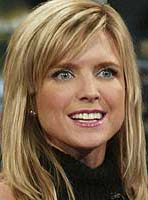


Rutger Hauer Courtney Thorne-Smith Brad Pitt Timo Hildebrand
(The Netherlands) (USA) (USA) (Germany)
Further examples:


(The Netherlands) (Germany) (Germany) "Dalofälisch" Swede
(from the Fischer Lexicon)
Geographical distribution:
Dalo-Falids are found in Northwestern Germany and surrounding areas, including southern Scandinavia and the Netherlands. It is mostly blended with Nordid and Borreby in the central areas, and Baltid towards the east.
Related or similar types:
- Brünn
The various terms with -Falid/Faelid/Phalian derive from the term fälisch, which was coined by Günther (fälische Rasse). It refers toWestfalen (Westphalia), where the type was believed to be especially numerous. The Dalisch/Dalo-element derives from the Swedish toponym Dalarna, where the type was first identified by Paudler in 1924 (dalische Rasse).
Other names:
- Dalisch (Paudler)
- Dalo-Nordic (von Eickstedt)
- Eurydolichomorph Cromagnid (von Eickstedt)
- Faelid (Lundman)
- Fälisch (Günther)
- Phalian/Phalic (English equivalent of Fälisch)
- Västmanland type (Lundman, as applied to a particular Scandinavian subset)
Origins:
Unreduced, basically unaltered Cro-Magnids of northern Europe, showing only partial gracilization and facial leptomorphicization with reference to the Upper Paleolithic material. They are in most regards similar to Irish Cro-Magnids of "Brünn" type (the two are distinguished by minor specializations only). Dalo-Falid or similar populations probably furnished an essential element in the formation of the Iron Age Nordid type(s), and the border between Hallstatt Nordid and Dalo-Falid is often blurry, despite differences in lateral measures and robusticity.
Description:
The Dalo-Falid is quite tall, and rather wide in most features, especially when compared to the more gracile Nordid. The neck is thick, the shoulders broad, and the general impression is of great strength and robusticity. There is a certain extent of sexual dimorphism, and whereas the men are typically very "masculine", the women develop corresponding features only to moderacy; they are often large-featured, however in a distincively female way.
The Dalo-Falid head is meso- to dolichocephalic, and is characterized by a wedge-like shape. The face is broad and somewhat short, often giving the impression of a compressed Nordid, which undoubtedly reflects the partial contribution of Dalo-Falid or a similar Cro-Magnid strain to the historical formation of the Nordid types. The maxillary bones are strongly developed.
The forehead is short and rather steep, and a characteristic supraorbital bulge is often seen, especially in men. In combination with deep-set eyes, which are also common in Dalo-Falids, this feature tends to give the type a “primitive” aspect.
The nose is relatively short, yet thin (meso- to leptorrhine), and often protrusive. The profile is mostly straight, with a slighttendency towards concavity (rather than convexity). In women, Alpinid-like noses are not uncommon.
The lower jaw is massive and broad, and the gonial angles are clearly visible, even flaring. The Dalo-Falid deviates from the Brünn in this latter respect, and while it is usually broad-faced, it seldom approaches the facial flatness common among Irish Brünns. However, the Dalo-Falid type is strongly orthognathous, with a nearly vertical mouth region, an impression which is reinforced by the thinness of the lips.
Furrows and folds appear at a relatively early age (in men, firstly), particularly on the forehead and along the sides of the nose and mouth. The skin is a bright rosy color, approaching red, which is less common in Nordids. The pigmentation of the Dalo-Falid type is nearly as light as that of Nordids. The hair is typically blond or brown, with a tendency towards rufosity, and the eyes are gray or blue.
Illustrations:
Celebrity examples:
Rutger Hauer Courtney Thorne-Smith Brad Pitt Timo Hildebrand
(The Netherlands) (USA) (USA) (Germany)
Further examples:
(The Netherlands) (Germany) (Germany) "Dalofälisch" Swede
(from the Fischer Lexicon)
Geographical distribution:
Dalo-Falids are found in Northwestern Germany and surrounding areas, including southern Scandinavia and the Netherlands. It is mostly blended with Nordid and Borreby in the central areas, and Baltid towards the east.
Related or similar types:
- Brünn
