Материал из Википедии — свободной энциклопедии

Малый камень в Еллинге
На малом камне, установленном около 955 года, первым датским королём Гормом Старым высечена надпись:
kurmr kunukr karthi kubl thusi aft thurui kunu sina tanmarkar but,что означает:
Горм король сделал памятный камень в честь Тюры, своей жены, Дании повелитель/повелительница.Это первое письменное упоминание названия страны Danmark, найденное в пределах самой Дании. Само название было известно как минимум за 75 лет до возведения монумента: в географическом описании Северной Европы, сделанном уэссекским королём Альфредом Великим датская территория называется «dene mearc».

Большой камень в Еллинге
Haraltr kunukr bath kaurua kubl thausi aft kurm fathur sin auk aft thaurui muthur sina sa haraltr ias sar uan tanmaurk ala auk nuruiak auk tani karthi kristna,то есть:
Харальд король поставил этот камень в честь Горма, отца своего, и Тюры, матери своей. Харальд, покоривший всю Данию и Норвегию, кто крестил датчан.Вытесанное на камне изображение ранее было цветным, его каменную цветную копию можно увидеть в национальном музее. Рунные камни расположены во дворе Еллингской церкви между двумя большими погребальными курганами. Они являются свидетельствами эпохи перехода скандинавов от язычества к христианству. Камни, вместе с могильниками и церковью, занесены в список Всемирного наследия ЮНЕСКО[1].
За свою долгую историю камни подвергались воздействию погоды, что привело к появлению трещин. В 2008 году эксперты ЮНЕСКО, изучив их состояние, предложили перенести камни в помещение. Однако Комитет по культурному наследию Дании решил оставить камни на их историческом месте, надежно укрыв стеклянными витринами. На основании конкурса, на который было представлено 157 проектов, был выбран оптимальный дизайн защитных конструкций. Проект был реализован в 2012 году.
-
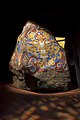 Еллингский камень, реконструкция
-
 Камни за стеклянными витринами


Примечания
- (side A)
- ᚼᛅᚱᛅᛚᛏᚱ ᛬ ᚴᚢᚾᚢᚴᛦ ᛬ ᛒᛅᚦ ᛬ ᚴᛅᚢᚱᚢᛅ
- ᚴᚢᛒᛚ ᛬ ᚦᛅᚢᛋᛁ ᛬ ᛅᚠᛏ ᛬ ᚴᚢᚱᛘ ᚠᛅᚦᚢᚱ ᛋᛁᚾ
- ᛅᚢᚴ ᛅᚠᛏ ᛬ ᚦᚭᚢᚱᚢᛁ ᛬ ᛘᚢᚦᚢᚱ ᛬ ᛋᛁᚾᛅ ᛬ ᛋᛅ
- ᚼᛅᚱᛅᛚᛏᚱ (᛬) ᛁᛅᛋ ᛬ ᛋᚭᛦ ᛫ ᚢᛅᚾ ᛫ ᛏᛅᚾᛘᛅᚢᚱᚴ
- (side B)
- ᛅᛚᛅ ᛫ ᛅᚢᚴ ᛫ ᚾᚢᚱᚢᛁᛅᚴ
- (side C)
- ᛫ ᛅᚢᚴ ᛫ ᛏ(ᛅ)ᚾᛁ (᛫ ᚴᛅᚱᚦᛁ ᛫) ᚴᚱᛁᛋᛏᚾᚭ
- (side A)
- haraltr : kunukʀ : baþ : kaurua
- kubl : þausi : aft : kurm faþur sin
- auk aft : þąurui : muþur : sina : sa
- haraltr (:) ias : sąʀ * uan * tanmaurk
- (side B)
- ala * auk * nuruiak
- (side C)
- * auk * t(a)ni (* karþi *) kristną
- (Jacobsen & Moltke, 1941-42, DR 42)
- (side A)
- [ˈharaldr ˈkʰɔnʊŋɡɽ ˈbɑð ˈɡœrwa]
- [ˈkʰʊmbl θøːsi aft ˈɡɔrm ˈfaðʊr siːn]
- [ʌk aft ˈθœrwɪ moːður siːna saː]
- [ˈharaldr ɛs sæːɽ wanː ˈdanmɒrkʰ]
- (side B)
- [ˈalːa ɒkʰ ˈnɔrwɛɣ]
- (side C)
- [ɒkʰ ˈdanɪ ˈɡarðɪ ˈkʰrɪstna]
- (side A) ᛬ ᚴᚢᚱᛘᛦ ᛬ ᚴᚢᚾᚢᚴᛦ ᛬
- ᛬ ᚴ(ᛅᚱ)ᚦᛁ ᛬ ᚴᚢᛒᛚ ᛬ ᚦᚢᛋᛁ ᛬
- ᛬ ᛅ(ᚠᛏ) ᛬ ᚦᚢᚱᚢᛁ ᛬ ᚴᚢᚾᚢ
- (side B) ᛬ ᛋᛁᚾᛅ ᛬ ᛏᛅᚾᛘᛅᚱᚴᛅᛦ ᛬ ᛒᚢᛏ ᛬
- (side A) : kurmʀ : kunukʀ :
- : k(ar)þi : kubl : þusi :
- : a(ft) : þurui : kunu
- (side B) | sina | tanmarkaʀ | but |
- (Jacobsen & Moltke, 1941-42, DR 41)
- Boris stones — similar landmarks in Belarus
- Curmsun Disc
- Haraldskær Woman
- Jelling stone ship — a ship setting that lay between the mounds
- Jelling style
- Tourism in Denmark
- Jelling stones. Encyclopædia Britannica. 2008.
- O'Donoghue, Heather (2008). Old Norse-Icelandic Literature: A Short Introduction. John Wiley & Sons. p. 27. ISBN 9780470776834. Retrieved 2014-02-27.
- "Eksperter: Runestenene skal reddes". Danmarks Radio. 16 November 2008. Retrieved 16 November 2008.
- Politiken.dk: Jellingstenene hærget af graffiti
- More Jelling Stones graffiti: Gelwane the Second and Web mining
- Politiken.dk
- "Gelwane" art project
- "Jelling Stones get designer cases". Copenhagen Post. 5 March 2010.
- Covering of the runic stones in Jelling, Denmark. - Copper Concept. Access date: 13 July 2012.
- Kure, Henning (2007). "Hanging on the World Tree: Man and Cosmos in Old Norse Mythic Poetry". In Andrén, Anders; Jennbert, Kristina; et al. Old Norse Religion in Long-Term Perspectives: Origins, Changes, and Interactions. Lund: Nordic Academic Press. pp. 68–73. ISBN 978-91-89116-81-8. p. 69-70.
- Jellingstenen - en del af historiekanonen, Lærere i grundskolen: Historie, EMU, Danmarks Undervisningsportal (Danish)
- Council of Europe http://prado.consilium.europa.eu/en/5672/viewImage_157135.html
- Hogan, C. Michael. "Jelling Stones," Megalithic Portal, editor Andy Burnham
- Rundata, Joint Nordic database for runic inscriptions.
- Jacobsen, Lis; Moltke, Erik (1941–42). Danmarks Runeindskrifter. Copenhagen: Ejnar Munksgaards Forlag.
From Wikipedia, the free encyclopedia

| Jelling Mounds, Runic Stones and Church | |
|---|---|
| Name as inscribed on the World Heritage List | |

Jelling stones, in their glass casing (2012)
|
|
| Type | Cultural |
| Criteria | iii |
| Reference | 697 |
| UNESCO region | Europe and North America |
| Coordinates | 55°45′21″N 9°25′10″ECoordinates: 55°45′21″N 9°25′10″E |
| Inscription history | |
| Inscription | 1994 (18th Session) |

Contents
History

The heritage site: The runestones in the foreground, in front of the
church graveyard. In the far background is one of two mounds.

Jelling Church

Interior of Jelling Church, showing frescos dating from 1125
Recent history
After having been exposed to all kinds of weather for a thousand years cracks are beginning to show. On the 15th of November 2008 experts from UNESCO examined the stones to determine their condition. Experts requested that the stones be moved to an indoor exhibition hall, or in some other way protected in situ, to prevent further damage from the weather.[3]In February 2011 the site were vandalized using green spray paint, with the word "GELWANE" written on both sides of the larger stone, and with identical graffiti sprayed on a nearby gravestone and on the church door.[4] After much speculation about the possible meaning of the enigmatic word "gelwane",[5] the vandal was eventually discovered to be a 14-year-old boy with Asberger's Syndrome and the word itself was meaningless.[6][7]
Heritage Agency of Denmark decided to keep the stones in their current location and selected a protective casing design from 157 projects submitted through a competition. The winner of the competition was Nobel Architects.[8] The glass casing creates a climate system that keeps the stones at a fixed temperature and humidity and protects them from weathering.[9] The design features rectangular glass casings strengthened by two solid bronze sides mounted on a supporting steel skeleton. The glass is coated with an anti-reflective material that gives the exhibit a greenish hue. Additionally, the bronze patina gives off a rusty, greenish colour, highlighting the runestones' gray and reddish tones and emphasising their monumental character and significance.[9]
Runestone of Harald Bluetooth

Harald's runestone, side A.
See transcribed runic text.
See transcribed runic text.


Engraving of an animal on one face of the stone.

The figure of Christ on Harald's runestone.
Modern copies of the runestone of Harald Bluetooth

The 1936 sign next to the Utrecht stone with the original runes, transliteration and Dutch translation.
A facsimile of the image of Christ on Harald's runestone appears on the inside front cover of the Danish passport.[12]
Runestone of Gorm
The inscription on the older and smaller of the Jelling stones reads: "King Gormr made this monument in memory of Thyrvé, his wife, Denmark's adornment." (Rundata, DR 41) The Old Norse inscription in Younger Futhark runes appears as follows:
|


See also

VIKING exhibition - the National Museum of Denmark

